
Where would an employee find an employers rules of etiquette?
“Dark Sky Approved” lights, which are designed to prevent light pollution while still providing sufficient illumination — a great choice if you live in a community that follows International Dark Sky Association guidelines
The flag should not be displayed on days when the weather is inclement aussie play no deposit bonus codes. The custom is to display the flag only from sunrise to sunset on flagstaffs in the open, but it may be displayed at night—if illuminated—to produce a patriotic effect. The flag should be displayed on all days, especially on:
(a) It is the universal custom to display the flag only from sunrise to sunset on buildings and on stationary flag staffs in the open. However, when a patriotic effect is desired, the flag may be displayed twenty-four hours a day if properly illuminated during the hours of darkness.
(j) No part of the flag should ever be used as a costume or athletic uniform. However, a flag patch may be affixed to the uniform of military personnel, firemen, policemen, and members of patriotic organizations. The flag represents a living country and is itself considered a living thing. Therefore, the lapel flag pin being a replica, should be worn on the left lapel near the heart.
On Memorial Day the flag should be displayed at half-staff until noon only, then raised to the top of the staff. By order of the President, the flag shall be flown at half-staff upon the death of principal figures of the United States Government and the Governor of a State, territory, or possession, as a mark of respect to their memory. In the event of the death of other officials or foreign dignitaries, the flag is to be displayed at half-staff according to Presidential instructions or orders, or in accordance with recognized customs or practices not inconsistent with law. In the event of the death of a present or former official of the government of any State, territory, or possession of the United States, the death of a member of the Armed Forces from any State, territory, or possession who dies while serving on active duty, or the death of a first responder working in any State, territory, or possession who dies while serving in the line of duty, the Governor of that State, territory, or possession may proclaim that the National flag shall be flown at half-staff, and the same authority is provided to the Mayor of the District of Columbia with respect to present or former officials of the District of Columbia, members of the Armed Forces from the District of Columbia, and first responders working in the District of Columbia. When the Governor of a State, territory, or possession, or the Mayor of the District of Columbia, issues a proclamation under the preceding sentence that the National flag be flown at half-staff in that State, territory, or possession or in the District of Columbia because of the death of a member of the Armed Forces, the National flag flown at any Federal installation or facility in the area covered by that proclamation shall be flown at half-staff consistent with that proclamation. The flag shall be flown at half-staff 30 days from the death of the President or a former President; 10 days from the day of death of the Vice President, the Chief Justice or a retired Chief Justice of the United States, or the Speaker of the House of Representatives; from the day of death until interment of an Associate Justice of the Supreme Court, a Secretary of an executive or military department, a former Vice President, or the Governor of a State, territory, or possession; and on the day of death and the following day for a Member of Congress. The flag shall be flown at half-staff on Peace Officers Memorial Day, unless that day is also Armed Forces Day. As used in this subsection –
The unwritten rules of professional etiquette
“Dr. Sharma has written an essential guidebook for students, a much-desired roadmap for professionalism revealing the secrets to success in academic programs, clinical training, and work in the broader professional community. A truly engaging compendium-the next best thing to receiving direct feedback from a cherished mentor!”
I care greatly about my students and their ultimate success, which is why I hold such a high bar for them while they are under my training. I have noticed that I intermittently tuck advice inside the manuals I write, the emails I send, and the lectures I give. I have decided to share that advice in this book so that you, too, can maximize your success. If I can lift you up with some of the suggestions in this book, then it elevates us all.
Even more complicated, the application of professionalism to specific situations varies not only by profession but also by context. For example, the particular expectations of a lawyer may be different from those of a teacher, and what may work in a hospital might not work in a business office. In both cases, the would-be professional will have to make a judgment based on the best available options. The fact that professionalism requires judgment necessarily means that there is no single right way to be professional in every situation. That is why you need to develop a mindset that maintains focus on your professional responsibilities.

“Dr. Sharma has written an essential guidebook for students, a much-desired roadmap for professionalism revealing the secrets to success in academic programs, clinical training, and work in the broader professional community. A truly engaging compendium-the next best thing to receiving direct feedback from a cherished mentor!”
I care greatly about my students and their ultimate success, which is why I hold such a high bar for them while they are under my training. I have noticed that I intermittently tuck advice inside the manuals I write, the emails I send, and the lectures I give. I have decided to share that advice in this book so that you, too, can maximize your success. If I can lift you up with some of the suggestions in this book, then it elevates us all.
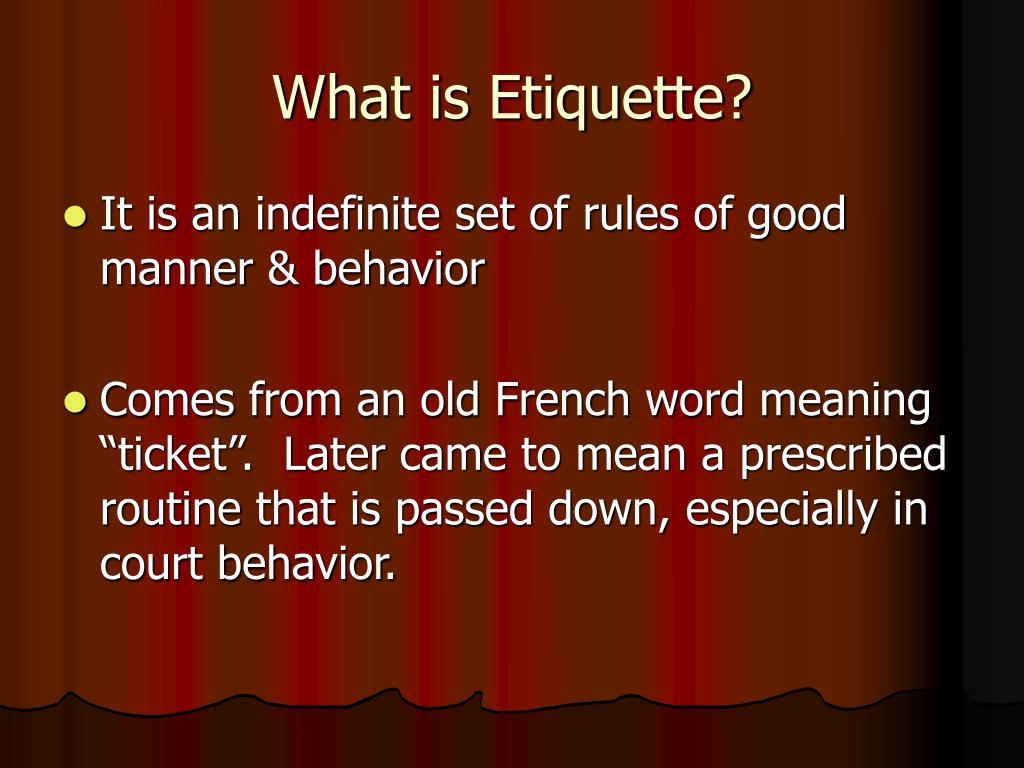
Describe the purpose of the rules of etiquette
Etiquette serves as a preventive measure against conflict. When people observe polite and respectful behavior, misunderstandings and disputes are less likely to arise. Whether in family gatherings, business negotiations, or public spaces, adhering to established etiquette norms can help prevent confrontations and promote a peaceful coexistence.
The practices that etiquette teaches are simple tools for enhancing your social behavior. They are not about rigid rules or outdated formalities — they are about creating a kinder, more respectful world, one interaction at a time.
Practicing proper etiquette also has a positive impact on one’s self-confidence and self-respect. When individuals are confident in their ability to navigate social situations with grace, they feel more self-assured. Furthermore, following etiquette guidelines can instill a sense of self-respect, as it reflects one’s commitment to treating themselves and others with dignity.
Etiquette serves as a preventive measure against conflict. When people observe polite and respectful behavior, misunderstandings and disputes are less likely to arise. Whether in family gatherings, business negotiations, or public spaces, adhering to established etiquette norms can help prevent confrontations and promote a peaceful coexistence.
The practices that etiquette teaches are simple tools for enhancing your social behavior. They are not about rigid rules or outdated formalities — they are about creating a kinder, more respectful world, one interaction at a time.
Practicing proper etiquette also has a positive impact on one’s self-confidence and self-respect. When individuals are confident in their ability to navigate social situations with grace, they feel more self-assured. Furthermore, following etiquette guidelines can instill a sense of self-respect, as it reflects one’s commitment to treating themselves and others with dignity.

No comments yet.